Example Processing of Array PLT Data
Horizontal wells are becoming increasingly common and therefore there is a need to make measurements to maintain the well and manage the reservoir. The acquisition of Production logging data in horizontal wells with multiphase flow is challenging for reasons of well access and because fluid segregation occurs. The correct conveyance method and toolstring must be chosen.
The well in this example is located in the North Sea and was completed as a gaslift producer. The well was cased and perforated with high water cut and sand production. The well has had to be choked back to ca. 10% due to high sand production since day one.
The chosen toolstring consisted of centralized tools: fullbore spinner; capacitance nuclear density, GHT and MAPS array tools: SAT and RAT. The conveyance method was tractoring.
The acquired data set was of good quality and therefore enabled successful identification and shut off of sand and water.
Tool rotation showed to be a significant benefit for array sensors run in this harsh environment. Tool rotation helped keep the sensors free from debris while the traditional centralised spinner show an increased tendency for jamming when intersecting sand dunes or restrictions along the well trajectory. In addition, the rotating array sensors provide better circumferential coverage in the well.
The analysis of this well was discussed in SPWLA paper SPWLA-D-10-00035 "New Sensor Development Helps Optimise Production Logging Data Acquisition in Horizontal Wells" prepared for presentation at the SPWLA 52nd Annual Logging Symposium held in Colorado Springs, Co, USA, May 14-18, 2011.
-
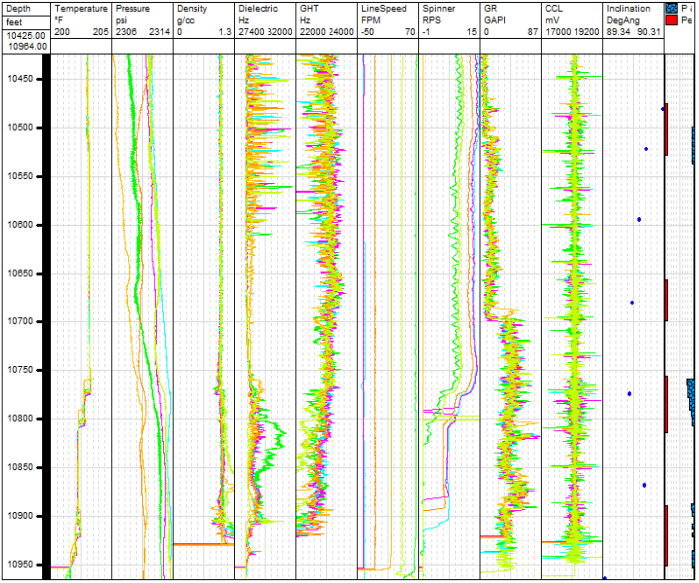 Input Log data with tracks showing measured curves at well site
 -
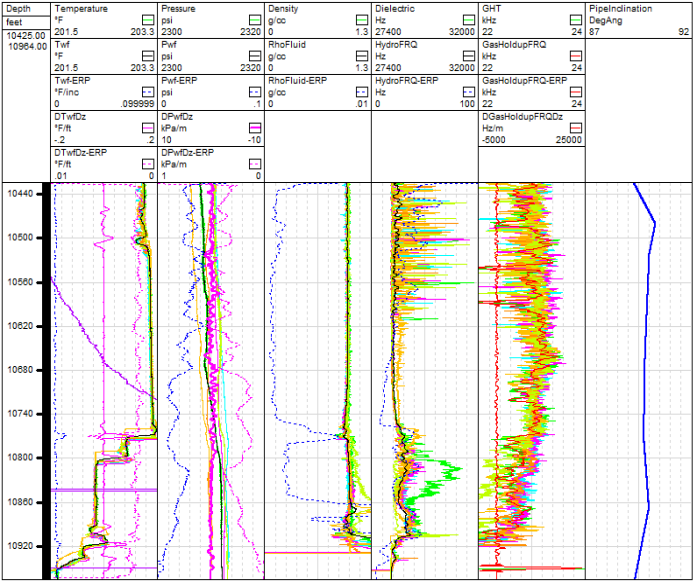 Results from the Preprocessing
 -
 Calibration of the Spinner data
 -
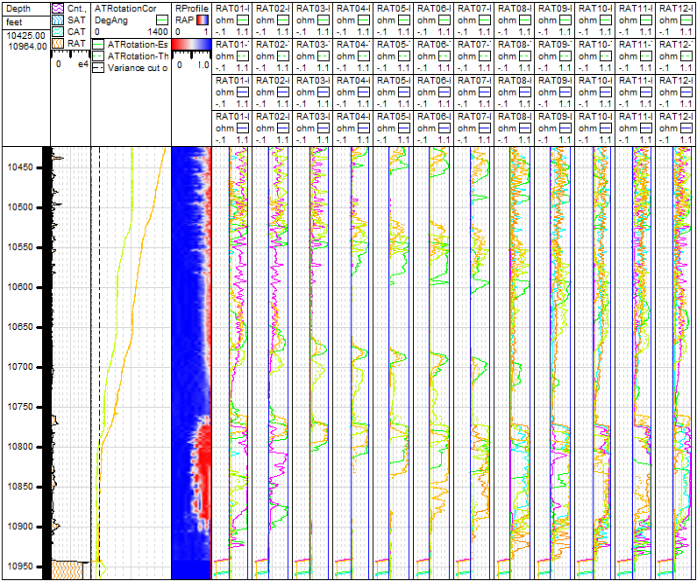 Calibration of the RAT data
 -
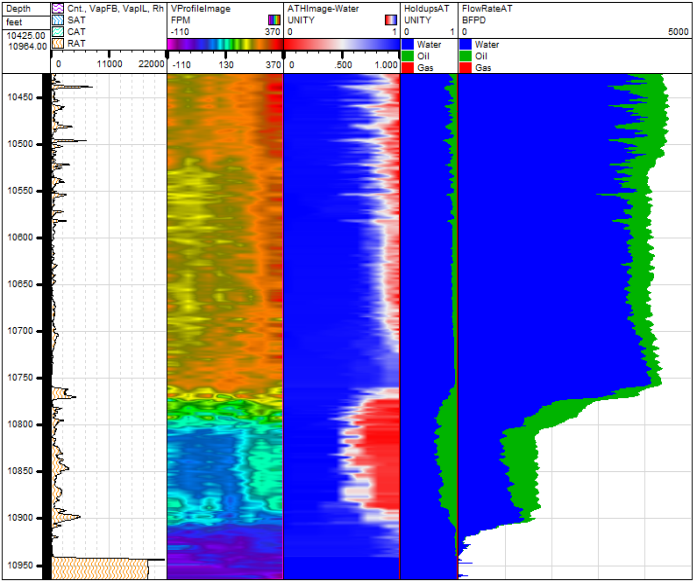 Layered Holdups and Velocity Profile
 -
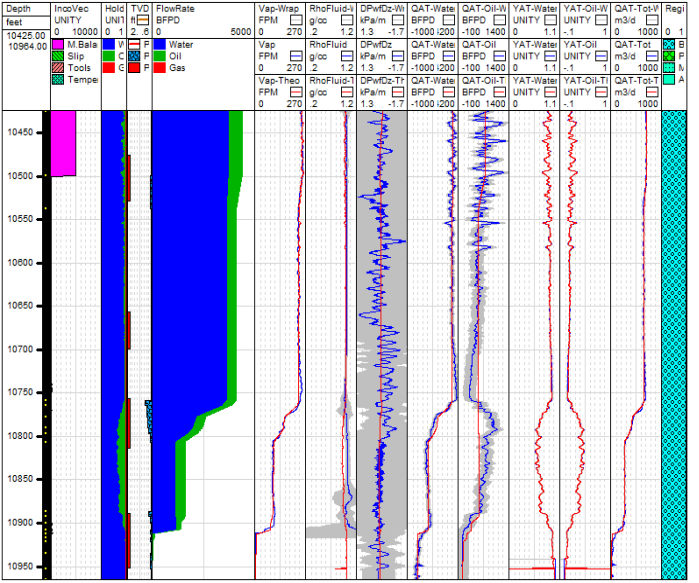 Verification of Flow Model